
Chakras
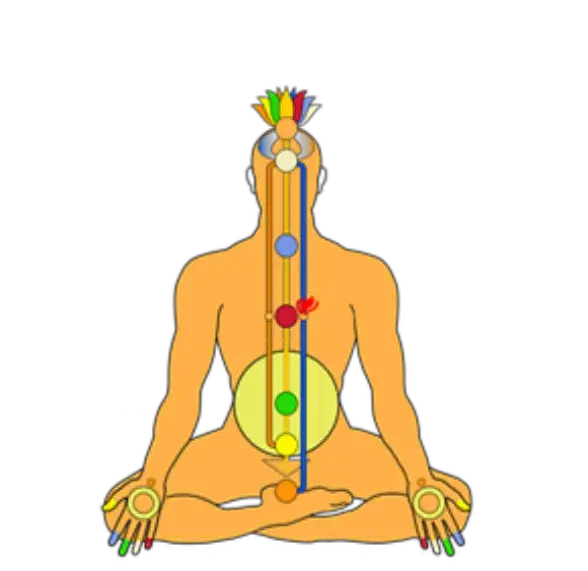
Everything in the universe is made up of pure, positive energy known as Prana or photon energy. This energy creates an electromagnetic field around everything called Aura. The Aura contains the blueprint of life of an organism. For us, the quantity and flow of Prana within the Aura reflects the state of health, happiness and even success in all aspects of life. When a person is struggling or suffering, it means that the flow of energy is either blocked, leaked or contaminated. To restore and balance the flow of energy within the Aura, various practices have been developed overtime. Some of these are Reiki, Yoga, meditation, Pranayama, Sound therapy, Magnet therapy, etc. These therapies work on the energy centers of the Aura called the Chakras.
What are Chakras?
Since the Chakra system is from India, the term Chakra is derived from Sanskrit. It literally means “wheel” or “disk.” Chakras are actually spinning vortexes of energy which are present within and outside the body. In Indian system there are seven major chakras and these are located along the spine. There runs the main energy channel known as the Sushumna Nadi.
Each chakra corresponds to specific organs, endocrine glands, emotional states, colours, foods, crystals and elements. These associations tell us how each chakra affects different aspects of our lives. So balancing each chakra individually and in relation to the others is important for the overall wellbeing of life. When the chakras are balanced, the individuals experience positive physical health, mental clarity, emotional stability, spiritual growth and a deeper connection to themselves and the world around them.
Primary Chakras
There are seven main chakras and each is located at a specific point along the spine.
Mūlādhāra or Root Chakra
Characteristics:
- Associated with Earth element.
- Located at the base of the spine between the genitals and the anus
- Security and survival issues like money and food.
- The Bīja Mantra of the Mūlādhāra Chakra is LĀM ( लं )
- The associated colour is RED.
- When blocked makes us fearful, co-dependent, feeling abandoned and restless.
- When overactive makes us materialistic and greedy.
- It governs the reproductive organs, the lower spine, legs, and feet.
Diseases:
- Constipation
- Kidney stones
- Related to lower back and legs
- Impotence
- Eating disorders
Healing of Root Chakra:
- Grounding meditation
- Movement of body
- Recitation of Bīja Mantra
- Red coloured foods or root vegetables
- Wearing red stones/crystals like red jasper and blood stone
Svadhishthāna or Sacral Chakra
Characteristics:
- Associated with water element.
- Located three inches below the navel, at the center of lower belly
- Creativity, pleasure, emotions, relationships and sexuality.
- The Bīja Mantra of the Svādhishthāna Chakra is VĀM ( वं )
- The associated colour is Orange.
- When blocked one experiences depression, lack of passion, detachment, manipulation, oversensitivity.
- When overactive, it makes one overemotional and sexual.
- It governs the reproductive organs, kidneys and lower back.
Diseases:
- Cysts
- Urinary issues
- Kidney problems
- Lower back pain
- Gynaecological problems
Healing of Sacral Chakra:
- Drinking lots of water
- Dancing
- Recitation of Bīja Mantra
- Orange coloured foods
- Wearing orange stones/crystals like carnelian and coral
Manipūra or Solar Plexus Chakra
Characteristics:
- Associated with fire element.
- Located in the upper abdomen.
- Self confidence and personal power.
- The Bīja Mantra of the Manipūra Chakra is RĀM ( रं )
- The associated colour is Yellow.
- When blocked one becomes indecisive and has low self esteem.
- When overactive one becomes dominating, manipulative, stubborn and aggressive
- It governs the digestive organs.
Diseases:
- Digestive issues
- Diabetes
- Liver diseases
- Stomach ulcers
- Addictions
Healing of Solar Plexus Chakra:
- Exposure to Sun
- Pranayama especially Kapalbhati and bhastrika pranayama
- Recitation of Bīja Mantra
- Yellow coloured foods
- Wearing yellow stones/crystals like citrine and tiger’s eye
Anāhata or Heart Chakra
Characteristics:
- Associated with air element.
- Located in the center of the chest.
- Ability to Love, express compassion, acceptance and forgiveness.
- The Bīja Mantra of the Anāhata Chakra is YĀM ( यं )
- The associated colour is Green
- When blocked, one becomes defensive, isolated, critical, holds grudges.
- When overactive one becomes possessive, jealous and co-dependent, selfish love.
- It governs the cardiac system and circulatory system.
Diseases:
- Respiratory diseases
- Cardiac problems
Healing of Heart Chakra:
- Devotional practices
- Pranayama
- Recitation of Bīja Mantra
- Green coloured foods
- Wearing green stones/crystals like Jade and Green Aventurine
Vishuddhi or Throat Chakra
Characteristics:
- Associated with ether element.
- Located in the throat.
- Ability to communicate and express.
- The Bīja Mantra of the Vishudhi Chakra is HĀM ( हं )
- The associated colour is Purplish blue.
- When blocked, one has fear of expression, lack of creativity, stubbornness, low self esteem, tells lies.
- When overactive one becomes very talkative, critical, unable to keep words and secrets, unable to listen.
- It governs the neck and mouth region.
Diseases:
- Thyroid diseases
- Dental problems
Healing of Throat Chakra:
- Singing
- Pranayama especially Anulom Vilom
- Drinking lots of water
- Recitation of Bīja Mantra
- Blue and purple coloured foods
- Wearing blue stones/crystals like Amazonite and turquoise
Ajnā or Third Eye Chakra
Characteristics:
- Associated with all the elements combined.
- Located between the eyebrows.
- Intuitive and psychic abilities, oneness with life.
- The Bīja Mantra of the Ajna Chakra is AUM
- The associated colour is Bluish purple and Indigo.
- When blocked, one experiences lack of clarity, indecisiveness, lack of faith and wisdom.
- When overactive one hallucinates, fantasises a lot, becomes judgemental and delusional.
- It governs the neck brain.
Diseases:
- Mental issues.
- Eyes and nose problems
Healing of Third Eye Chakra:
- Wearing blue stones/crystals like Amethyst
- Meditation on third eye
- Pranayama
- Recitation of Bīja Mantra
- Indigo and purple coloured foods, dark chocolate, walnuts
Sahasrāra or Crown Chakra
Characteristics:
- Associated with no elements but thought
- Located at the crown of the head
- Connection with the higher consciousness, transcendence of limitations, oneness with all life forms.
- The Bīja Mantra of the Sahasrara Chakra is AUM
- The associated colour is White, Indigo and Gold
- When blocked, one is materialistic, greedy, lack of ethics and values, lack of faith.
- When overactive one is over spiritual and lacks connection to the physical world, over thinking, sensitive to light and sound
- It governs the central nervous system and brain
Diseases:
- Mental issues.
- Neurological disorders
Healing of Crown Chakra:
- Wearing white/ transparent stones like diamonds and clear quartz
- Divine Light Meditation
- Pranayama especially Anulom Vilom and Kapalbhati
- Recitation of Bīja Mantra
- Light and healthy foods and sometimes fasting
Understanding The Chakras
The lower three chakras, (root, sacral and solar plexus) are masculine in nature and give us the ability to take action. They help us to ground ourselves and are usually concerned with the material world. The higher three chakras (throat, third eye and crown chakra) are feminine in nature. They give us the ability to self-reflect, psychic abilities and represent spiritual aspects of life. The heart chakra has balanced masculine and feminine energy, and so it helps us to balance the other six chakras. When all the chakras are open and balanced, energy flows freely through the body and we can experience good physical and emotional health, spiritual awareness, and a sense of inner peace. However, when one or more of the chakras are blocked or out of balance, we experience physical and emotional symptoms, such as pain, anxiety, or depression.
The chakra system shows us how our physical, emotional, and spiritual selves are deeply connected. By becoming aware of these energy centers and taking steps to balance them, we can unlock our full potential and live more vibrant, fulfilling lives.
Remember, the path to chakra balance is a personal and ongoing one. Be patient with yourself, and embrace the journey with an open heart and mind. After all, the ultimate goal is not perfection but harmony—within ourselves and with the world around us.